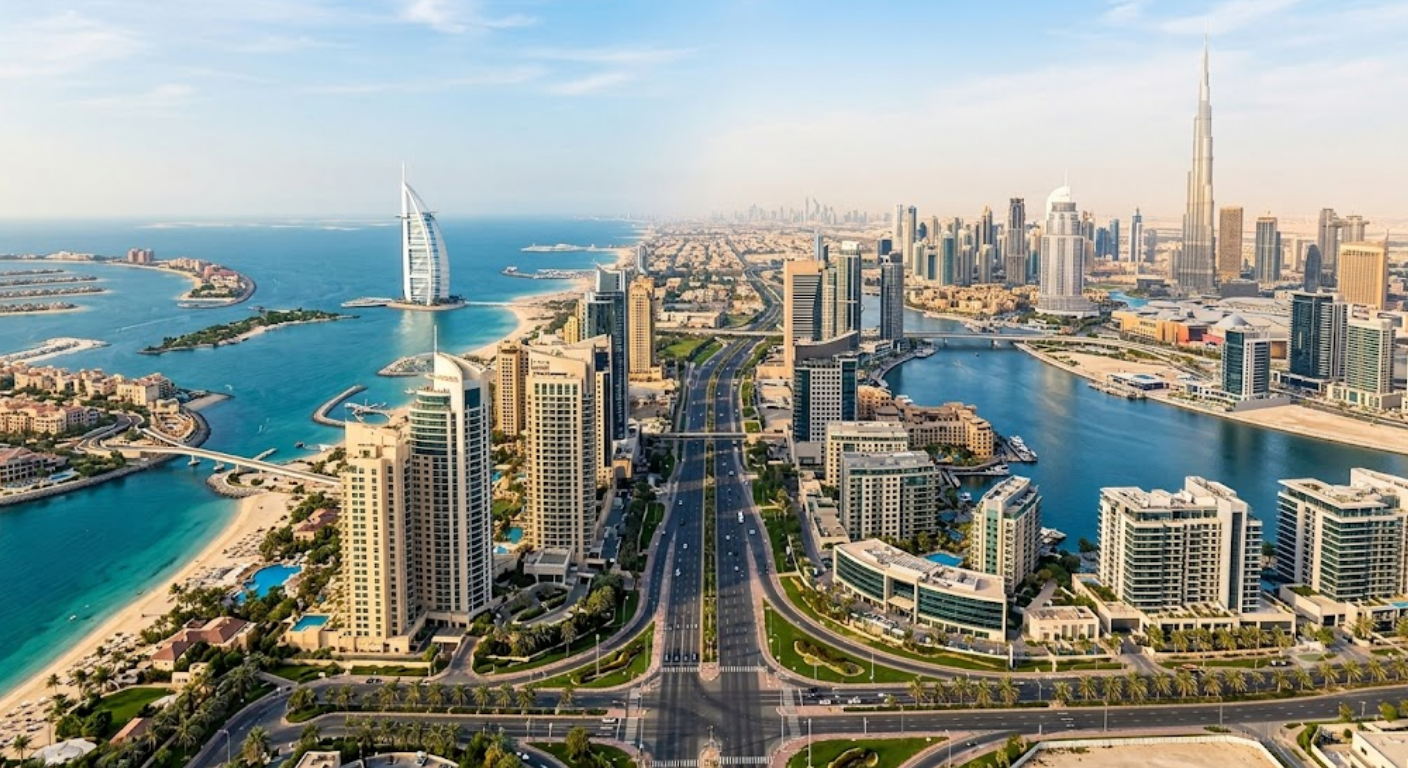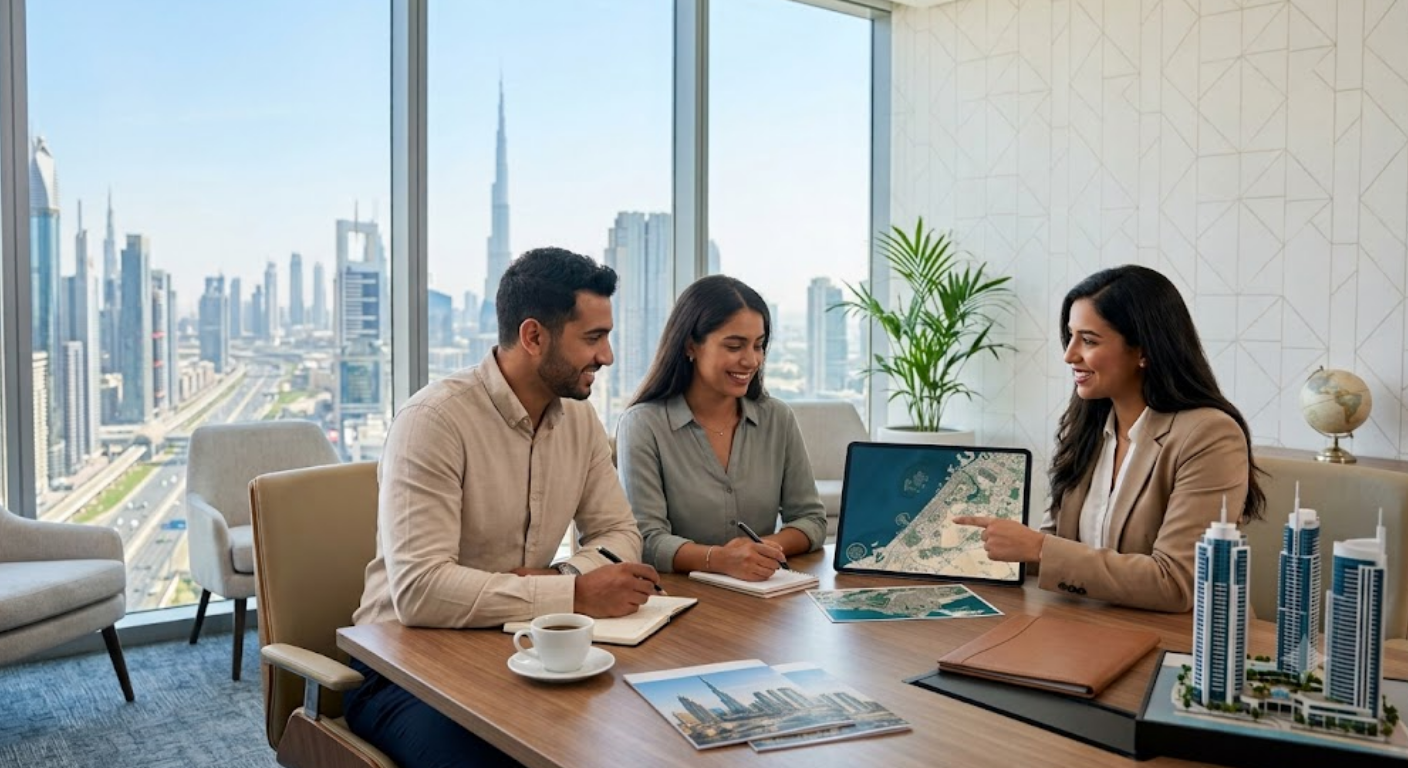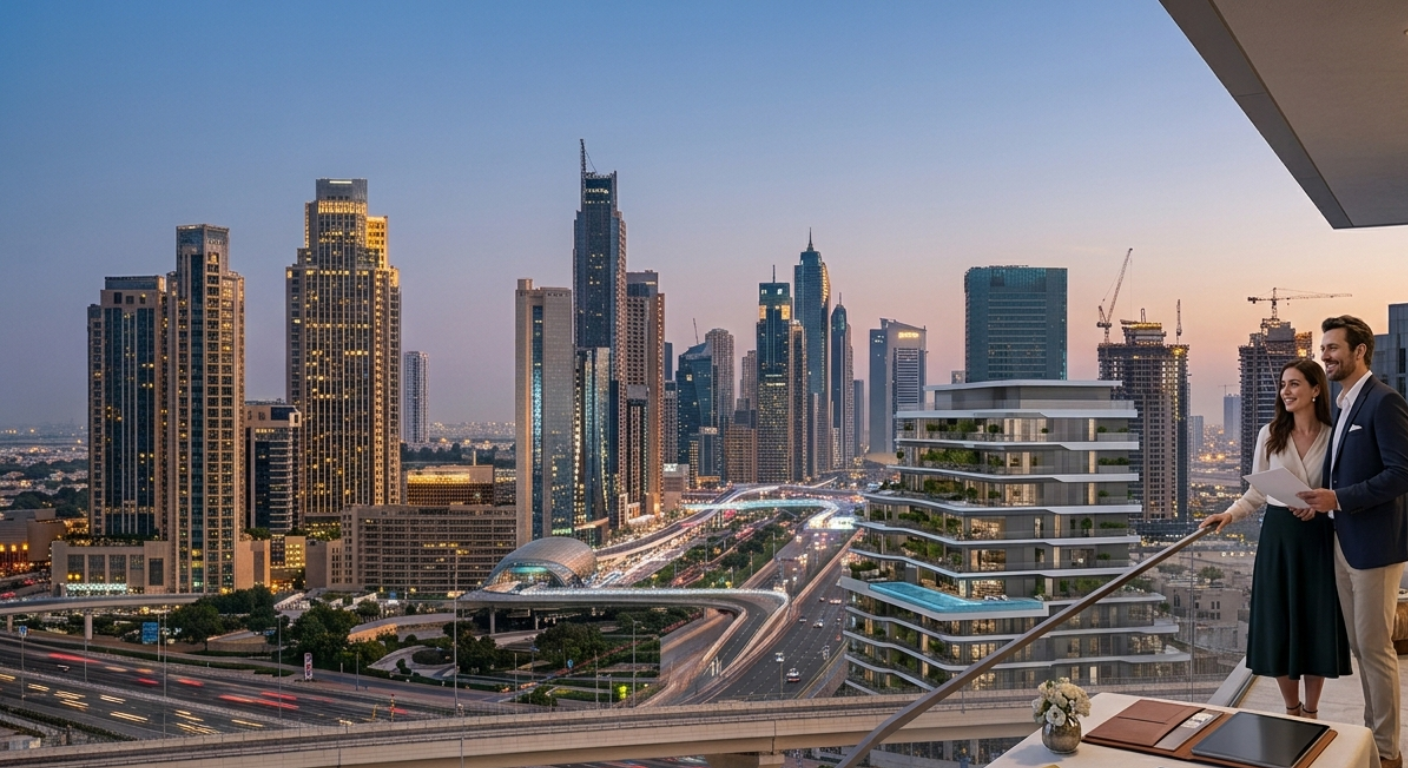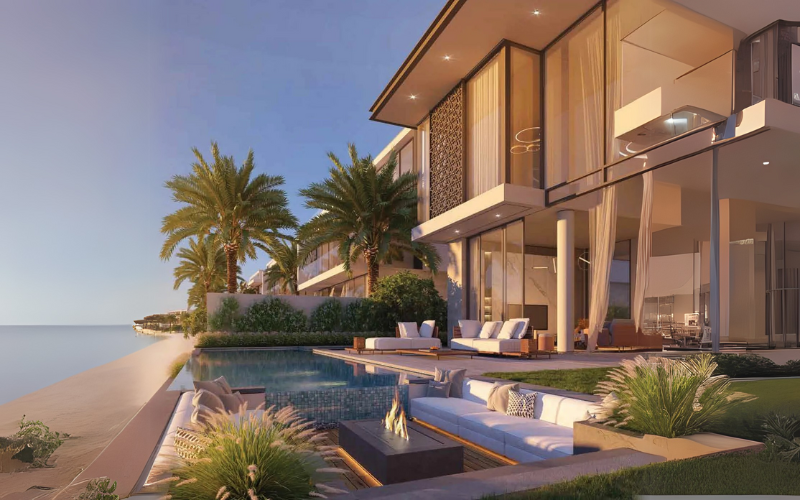

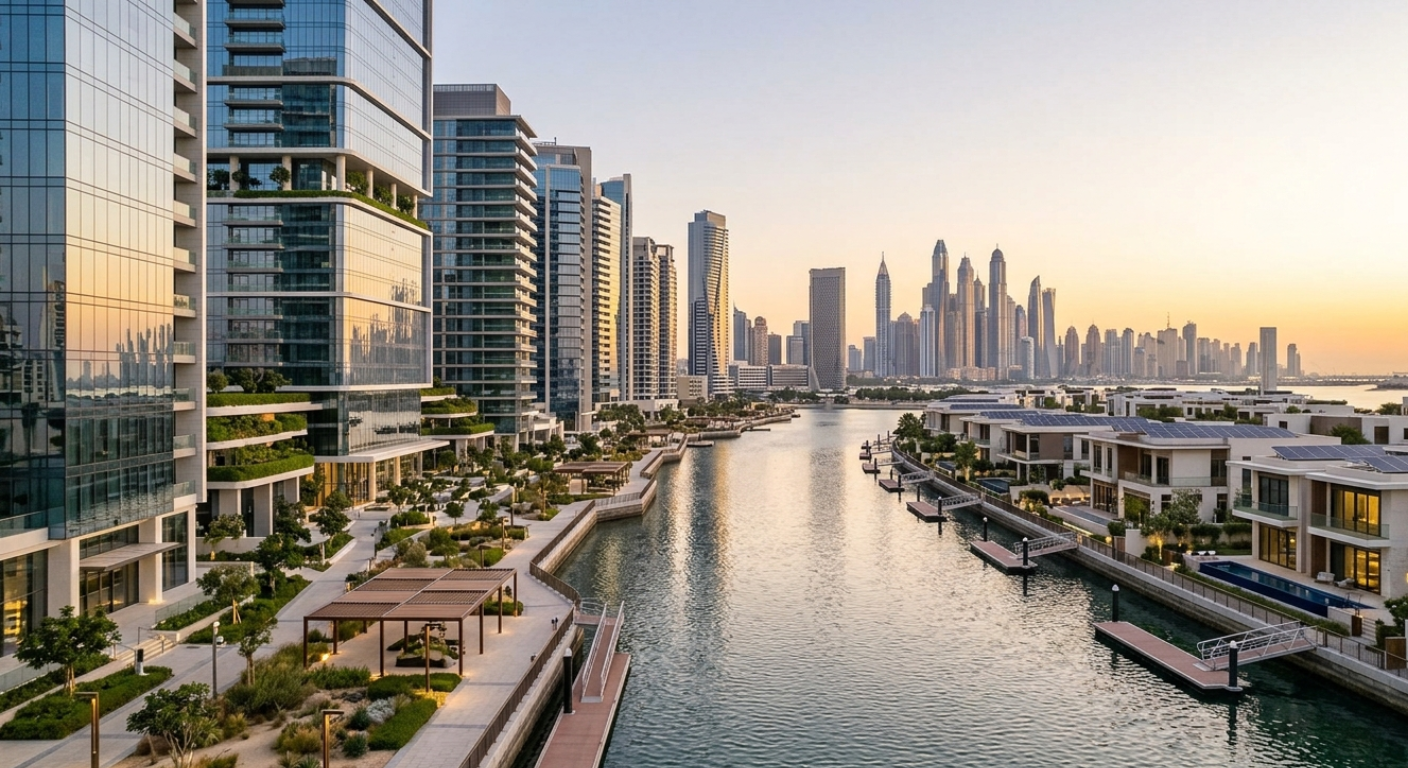
Dubai real estate is now established on an entirely new level. The era of boom-and-bust speculative activity has ended. Rather than speculative investing, investors are now looking at a mature and data-driven property market characterized by substantial increases in population, supportive government policies, and record transaction volume. Whether you’re new to property investment overseas or a seasoned portfolio investor, being aware of the current trends impacting the Dubai real estate market could mean the difference between an acceptable or outstanding return on your investment.
The following are items that every investor should know as we approach the second half of 2026.
- Unprecedented Levels of Transaction Volume
Dubai’s real estate market is experiencing unprecedented levels of activity. According to the Dubai Land Department (DLD) statistics, the number of residential real estate transactions in 2025 was 214,912 transactions amounting to a total of AED 682.5 billion – this equates to an increase of 49.6% over 2024. By comparison, the number of real estate transactions in 2025 was 464% higher than the level of transactions in 2021.
January 2026 continued this trend by averaging an increase in the number of completed transactions of 86.5% compared to the total completed transactions in January 2025. This is not a speculative bubble of transactions. According to the analysts at Knight Frank, the increase in transaction volume is indicative of; “real demand from end-users” and there has been a significant structural change in the demand for properties in Dubai as evidenced by long-standing investor confidence levels as well the demand for property by owner-occupiers and tenants. This is a major departure from the speculative boom-and-bust cycles of the past.
What this means for investors: High liquidity makes entry and exit easier. More transactions mean more comparable data, better price discovery, and reduced risk of being locked into an illiquid asset.
- Prices Are Still Growing – But the Easy Money Is Behind You
Property values in Dubai continue to rise but at a more moderate rate. Average square foot prices were AED 1,850 in 2025 (up 8.1% from 2024). Prices across the entire property sector have increased approximately 60–75% since the end of COVID-19.
The greatest appreciation has occurred in villas and townhouses, where some locations have seen annual price increases of up to 14–31%. While the apartment market is also performing well, supply levels are substantially higher than in previous years, resulting in lesser annual growth.
Predictions from Cushman & Wakefield estimate an increase in both price and rent of 8–12% during the second half of 2026 and an additional 10–12% increase in the price of luxury villas until the end of 2026. However, larger gains than double digits seen in 2022–2024 will not occur again at that rate.
For investment decisions, location is extremely important in a more stable market; well-established high-demand areas will be very different from under-performing areas. The best option is always one that is well established and in high demand rather than one that is speculative on the outskirts.
- Off-Plan Dominates – and For Good Reason
Off-plan property now accounts for over 70% of total residential transactions in Dubai. In H1 2025 alone, 94,700 investors contributed AED 326 billion in investments, with 59,000 new investors entering the market, a 22% rise year-on-year.
The appeal is straightforward: flexible post-handover payment plans, lower entry prices compared to ready units, and strong capital appreciation potential between launch and handover. Developers launched over 150,000 new units in 2025 to meet demand, with nearly 366,000 residential units projected to enter the market by 2028.
However, a supply wave of this magnitude carries risk. If multiple handovers hit simultaneously, rental yields in oversupplied sub-markets could compress. The key is picking developments in locations with genuine absorption capacity, communities backed by infrastructure, employment hubs, and population growth.
Based on transaction volume, the top performing sub-markets for off-plan properties in Dubai in 2023 were Jumeirah Beach Circle (JVC), Business Bay, Mohammed Bin Rashid City, Dubai Hills Estate, Dubai Marina, Dubai South and Tilal Al Ghaf.
Based on the above information, it is clear that the off-plan property segment in Dubai is still extremely viable for generating strong returns; however, it is essential that investors complete adequate due diligence with regards to the developer’s track record, the fundamentals of the location, and future potential supply in the surrounding area prior to purchasing off-plan properties in Dubai.
- Rental Yields Remain Among the Highest Globally
When it comes to rental yields in the United Arab Emirates, Dubai is a well-known city. With an average gross yield around 7%, Dubai’s rental yields will often beat most comparable cities globally, including New York and London, at just 3–4%. Additionally, after record rental growth of approximately 14–21% annually during 2024, rental growth settled into a reasonable range of about 8.5% annually through mid-2025, still considerably higher than the average growth rates in other parts of the world. Vacancy rates remain relatively low in these areas with strong schools, amenities, and connectivity to surrounding transit systems.
One factor supporting continued growth in the rental market is that Dubai’s population exceeded four million in 2025, with the expectation of at least another 175,000 to 225,000 new residents in 2026 alone, providing a steady increase in demand for rental housing across all price points.
Investors looking for yield-oriented properties should consider that the United Arab Emirates will continue to provide strong value as compared to similar global markets, especially within the mid-market and family-focused community segments.
- The Luxury Segment Is in a League of Its Own
Luxury real estate sales in Dubai are increasing at an unprecedented pace due to the wealth of ultra-wealthy individuals, driven primarily by sales of branded residences (branded residences are high-end properties with brand affiliation), waterfront penthouses and villas located in various areas of Palm Jumeirah, Emirates Hills, and Emaar Beachfront.
Clearly, since multiple years now, the UAE has taken the top spot within international rankings relating to the migration of millionaires. Factors contributing to this trend include: a no income tax environment, flexible residency visa program, and perception of safety and stability associated with living in the UAE.
The purpose of the Dubai 2040 Urban Master Plan is to create a plan that can accommodate approximately 5.8 million permanent residents in the UAE by the year 2040. This plan also provides a framework for long-term government policies to help develop luxury residences by creating an environment where buyers can have confidence knowing their investments will be supported by the government over an extended period of time.
Lastly, for investors who can afford to invest in the luxury real estate sector, the combination of capital growth, demand from wealthy expatriates for rental units and limited supply (scarcity) of prime real estate will create a compelling case for making luxury real estate investments that will provide superior returns over an extended time frame.
- Technology Is Transforming How Dubai Trades Property
The city of Dubai has emerged as not only a leader in terms of its real estate construction but also an innovator in the use of new technology. The Dubai Land Department (“DLD”) has introduced a number of new initiatives that have transformed the way real estate transactions are processed in Dubai:
- Real Estate Evolution Space (REES): An AI and PropTech framework cementing Dubai’s position as a global leader in digital property infrastructure.
- Smart Rental Index 2025: Uses AI to deliver accurate, real-time rental price assessments across all residential areas, increasing transparency for investors.
- Blockchain-based property registration: Enabling faster, more secure transactions with reduced fraud risk.
- MENA’s first tokenised property initiative: Fractional ownership is now a reality, democratising access to Dubai real estate for smaller-scale international investors.
In addition, in the first half of 2025, the DLD processed over 1.3 million transactions for real estate. This figure shows how efficient the technology has made the process of buying and selling real estate.
How does this affect investors: Greater transparency, faster transactions, and the development of fractional ownership models will make it easier for investors to access the market. Watch the rise of tokenisation – a new investment option that has the potential to dramatically change the dynamics of real estate investment.
- Sustainability Is No Longer Optional
Dubai’s Net-Zero 2050 commitment is reshaping what buyers and tenants expect from properties. Green-certified developments, energy-efficient buildings, EV charging infrastructure, and smart home systems are moving from premium differentiators to baseline requirements.
Also, ESG (Environmental, Social, and Governance) considerations are no longer seen as luxury features. Rather, they are now considered essential criteria for making investment decisions. Developers who do not have sustainability features in their product offerings may be subject to rental and resale discounts because of changing tenant preferences and legislative updates to comply with national climate goals.
How does this affect investors: When investors are looking at any new development, green certification and energy efficiency ratings should be included in their due diligence checklist. The availability of green certifications and energy efficiency ratings will affect both return on investment and long-term capital appreciation.
- Geopolitical Risk Deserves an Honest Assessment
When conducting a market analysis, there are several factors that must be considered: geopolitical environment, regional security issues, economic conditions, social factors, etc. Tensions in certain regions have resulted in many investors adopting a “waiting and seeing” attitude (at the beginning of 2026), and analysts expect “cautious investors” to go to the sidelines – or “safe-harbours” – should the conflict become prolonged.
Despite these challenges to the market, the structural case for investing in Dubai remains intact. Whether aviation-defence structures, economic diversification or being viewed as a neutral country for business/finance, provide Dubai with the necessary tools to remain strong and continue to benefit from any potential interruptions in operations due to widespread civil disruption.
In addition, major developers and key market players, such as Mohamed Alabbar (Emaar), believe that the relatively fast recovery will occur as a result of substantiated consumer confidence. There is no shortage of positive attributes that Dubai possesses: low tax, strong infrastructure, global connectivity and diverse investor base will not be lost.
For investors, there is no question that geopolitics will play a key role in making strategic decisions. However, since history has shown that long-term holders with a time horizon of 5-10 years and good location (or location dependent) in periods of uncertainty have had the highest returns, the investment community should consider this as part of their capital allocation strategy.
Key Investment Hotspots for 2026
Based on current fundamentals, the following communities stand out for investors across different profiles:
| Community | Investment Profile | Key Driver |
| Dubai Hills Estate | Mid-luxury, family | Schools, parks, Emaar quality |
| Jumeirah Village Circle (JVC) | Yield-focused | High volume, accessible pricing |
| Dubai South | Long-term growth | Al Maktoum Airport, Expo City |
| Mohammed Bin Rashid City | Premium capital appreciation | Central location, master-planned |
| Dubai Creek Harbour | Emerging luxury | Waterfront, connectivity |
| Business Bay | Commercial + residential mix | CBD proximity, rental demand |
The Market Has Grown Up
Dubai’s real estate market in 2026 is not the speculative playground it once was. Record transactions, institutional-grade transparency, PropTech innovation, and a resident population that has crossed 4 million have combined to produce something more durable: a real global property market.
For investors, this means the playbook has changed. Timing the market matters less. Choosing the right property in the right location, with a realistic yield expectation and a medium-to-long holding horizon, matters far more.
The fundamentals are strong. The opportunities are real. But so is the need for thorough research, credible local advice, and a clear-eyed view of the risks.
Ready to explore the future of luxury living in the UAE? Connect with Tashirz and discover premium real estate opportunities tailored to your lifestyle and investment goals.