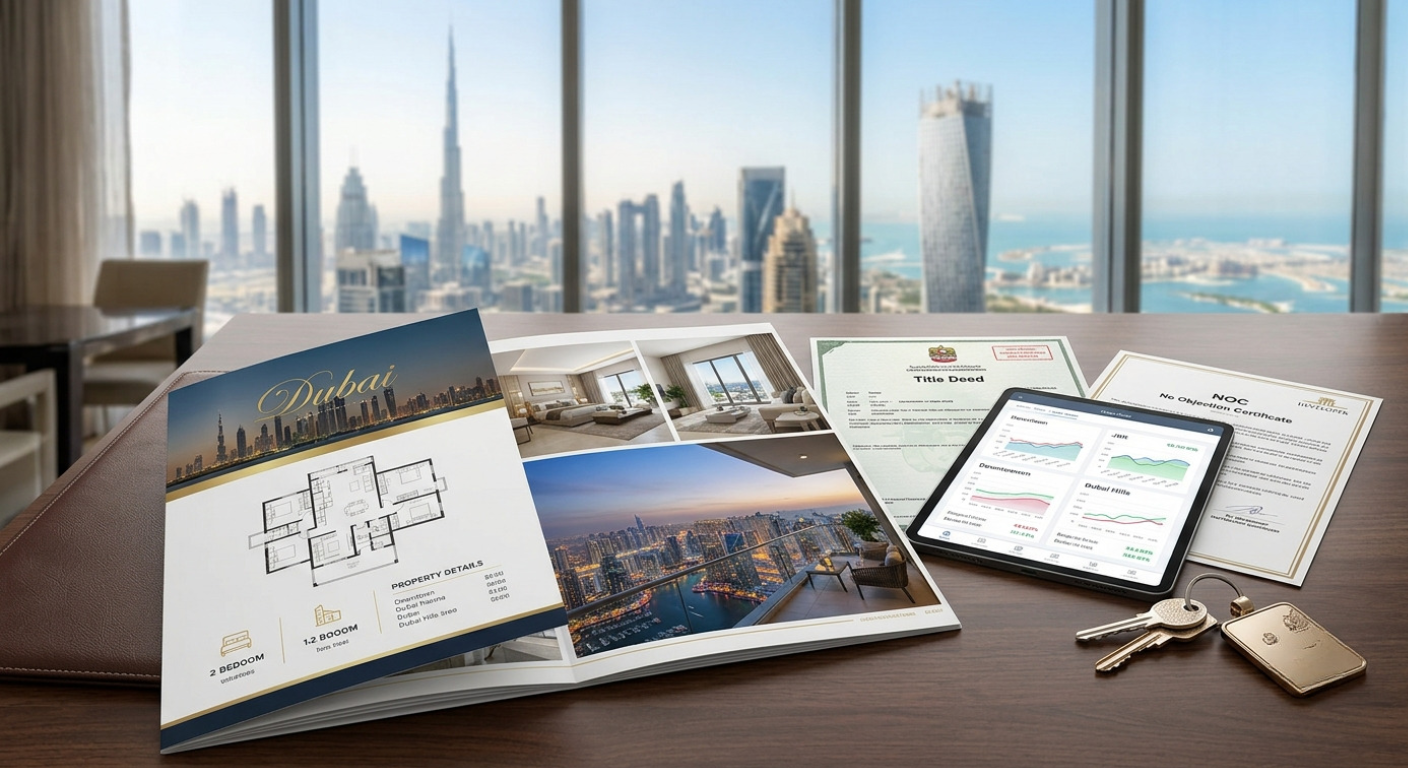

Dubai property sales can enable you to realize the potential of your investment, obtain funds, or shift into a new property. However, selling a property is more than simply quoting the asking price. Owners must have a good feel of the market and prepare the documents for the transaction, determine selling expenses, and comply with the selling process.
Be it an apartment, villa, or off-plan property, understanding the property resale process can enable you to make wise choices and avoid delays in selling your property.
1. Get Current Property Market Information
Before putting your property on the market, it is necessary to check the current market situation in your locality. The property price will depend on a number of factors such as location of a property, its condition and facilities, demand, etc.
Take into account the following elements:
- The recent sold prices of comparable properties
- The current asking prices of similar properties
- The demand in your area
- The state of the property and the available amenities
- The potential for rental income (if any)
Having information about prices of similar properties is essential to determining a reasonable asking price, and to make your offer attractive to real buyers.
2. Set the Right Selling Price
Pricing is one of the most crucial decisions when selling property in Dubai. Whom to ask a price too high will put off buyers, and pricing it too low will lower your potential earnings.
When defining the proper price one needs to consider the size, floor, views, condition, parking availability, and location of the property within the complex. If it is rented out, one should also take into account its rental income and tenancy conditions.
Look at the previous deals of similar properties and ask for help from experts in necessary cases. Keep in mind that asking prices are not always prices at which the deal is made.
3. Prepare Your Property for Sale
A property that is presented well will leave a more positive impression at viewings. Do minor fixes, deal with any obvious maintenance issues, and make sure that the property is clean and tidy before listing it.
Make sure to take good quality pictures of the property and write a good description that outlines its key features, facilities, location, and transport connections.
For empty properties, staging and careful presentation are helpful as they show buyers how the space can be used. For rented properties, provide details of the tenancy as buyers will want to know about it.
4. Understand the Costs of Selling Property in Dubai
Calculate the costs before accepting the offer to sell the property. Costs include:
- DLD registration fees
- Real estate agent commission if applicable
- Developer’s NOC or administrative costs if applicable
- Mortgage settlement and discharge costs if applicable
- Any pending service charges
- Property upkeep or maintenance costs.
DLD states that the registration fee for property sale is 2% of the sale price for both seller and buyer and they may revise the fee accordingly. Besides there may be extra fee for service and documents involved therefore is advisable to find out charges pertinent to your transaction beforehand.
5. Prepare the Required Documents
Being prepared with the correct documentation can help to avoid delays when reselling a property. Each transaction has its own requirements, but the fulfillment of the following documents is mandatory:
- Title deed
- Identify document
- The property and ownership details
- NOC from the developer
- Mortgage clearance certificate
- Power of attorney for the representative conducting the transaction
Requirements for the process may change. Always check what the key documents involved are with the Dubai Land Department, the developer, or a real estate professional.
6. Know the Difference Between Ready and Off-Plan Resale
When deciding to resell your property, the stage of the project will have a significant impact on the process.
Reselling a Finished Property
For a finished property with a physical title deed, the process would include agreeing on the sale price, completing the relevant checks, getting the relevant developer’s NOC, and completing the transfer through the DLD.
If your property has a mortgage, the location and transfer should be arranged accordingly.
Reselling an Off-Plan Property
If you intend to sell your unit before it is ready for handover, there might be some additional conditions you need to take care of. Your ability to sell will depend greatly on the developer’s resale policy, the purchase agreement, the dues, and any minimum payments required.
Thus, before placing an advertisement, it is a good idea to check your contract and clarify the transfer requirements with your developer.
7. Consider Your Property’s Rental Status
If you are selling a property that is currently being rented out, it’s important to find out if the tenancy will affect the sale.
Investors may find an occupied property appealing because it can generate income that will help pay for expenses, while buyers who want to move in may have other needs. Be upfront about the rent, tenancy agreement, termination date of the contract, and other relevant details of the existing agreement.
The implications of a sale on the existing tenancy depend on applicable legislation and the specific situation. Make sure to seek the right advice before you commit to anything regarding possible vacant possession of the property.
8. Work With a Reliable Real Estate Agent
An experienced real estate agent would help you analyze the property market, set an asking price, market the property, schedule fact-finding visits, negotiate offers and provide you with the right advice on the sales process.
When looking for your agent, consider his experience in your neighborhood, knowledge of the prices of similar properties, his sales techniques, his style of communication, and fees.
Also, ask him how he is going to find proper buyers and what documents he needs from you.
9. Complete the Sale and Ownership Transfer
After the agreement is accepted, the parties should sign the sale agreement and fulfill other requirements defined for the transfer.
This includes signing the sale agreement, filing for necessary permits, disposing of any pending dues, arranging payment of the amount, and recording transfer of ownership through the respective channel from the DLD.
It is necessary to confirm in advance the instructions for payment, fees, and all aspects of the transfer. Once an agreement is made, the buyer gets confirmation of ownership.
Common Mistakes to Avoid When Reselling Property
Before putting your property on the market, avoid these common mistakes:
- Overpricing the property: Base your asking price on market evidence rather than expectations alone.
- Ignoring selling costs: Calculate fees and outstanding obligations before estimating your profit.
- Overlooking property documentation: Resolve missing documents or outstanding requirements early.
- Ignoring off-plan resale conditions: Confirm developer restrictions and payment obligations before proceeding.
- Providing incomplete information: Be transparent about the property’s condition, tenancy, and relevant costs.
- Choosing an agent based only on commission: Consider the agent’s experience, service, and marketing strategy.
Final Thoughts
Reselling property in Dubai requires careful planning, realistic pricing, accurate documentation, and an understanding of the applicable transfer process. Whether you are selling a completed apartment, a villa, or an off-plan unit, reviewing your costs and obligations before listing can help you make better decisions.
At Tashirz, property owners can explore Dubai real estate opportunities and seek guidance when evaluating their next move. With the right preparation and professional support, you can approach your property resale with greater clarity and confidence.
Frequently Asked Questions
How can I resell my property in Dubai?
Start by assessing the market value, preparing the property and documents, and agreeing on suitable sale terms with a buyer. Complete the required approvals and register the ownership transfer through the appropriate DLD process.
What fees should I consider when selling property in Dubai?
Potential costs include DLD registration fees, agent commission, developer NOC fees, mortgage settlement costs, and outstanding service charges. The actual amount depends on your transaction.
Can I sell an off-plan property before handover?
It may be possible, but resale depends on the sale agreement, developer requirements, payment status, and applicable registration procedures. Confirm the conditions with the developer before proceeding.
Can I sell a property that has an outstanding mortgage?
A mortgaged property may be sold, but the mortgage settlement and transfer arrangements must be coordinated with the lender and relevant parties.
How do I determine the right resale price?
Review comparable transactions, current listings, location, property condition, amenities, and rental performance where relevant. A professional valuation can provide additional guidance.
Do I need a real estate agent to sell my property in Dubai?
An agent can assist with pricing, marketing, viewings, negotiation, and transaction coordination. Consider the available support and applicable requirements when deciding how to sell.